
Bin värme trivs: How Warmth Helps Honey Bees

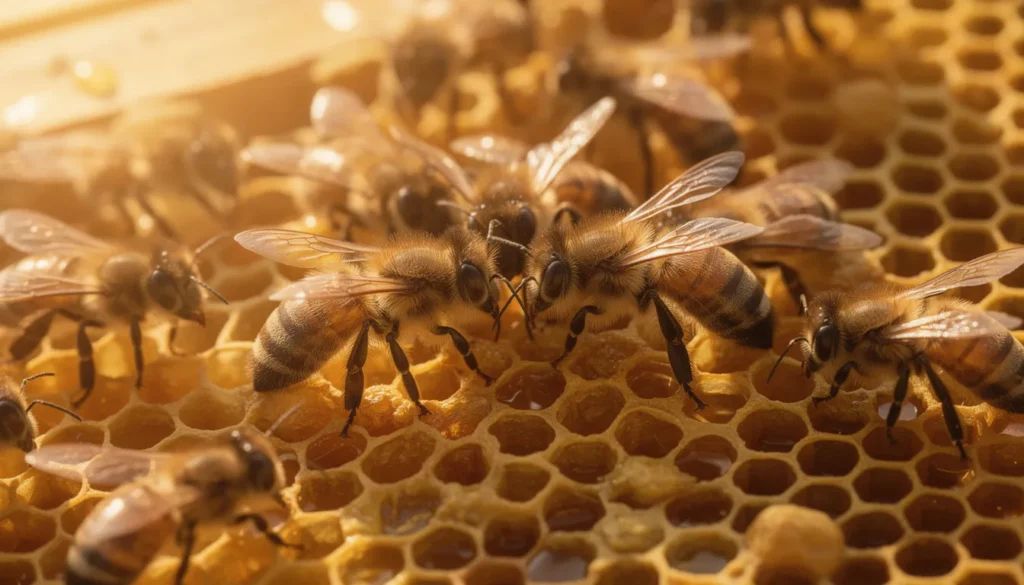
Bin värme trivs captures a straightforward truth: honey bees thrive in warmth. A colony keeps its brood nest at about 34–35 °C and forages best above 10 °C. In hot weather, bees cool the hive by fanning and evaporating water, while beekeepers mostly provide shade and water.
For related Swedish explainers, see Uppgång's Swedish explainers. Uppgång also explains how Sweden approached ending the pandemic crisis; the same source-first editorial approach is set out in the privacy policy.
- What the Swedish phrase means and the key brood-nest numbers
- Bee hive temperature range: what a honey bee colony maintains by season
- How bees cool the hive in summer
- Beekeeping heatwave care: a practical checklist
- Summer heat vs winter cluster: why bees handle both
- What the evidence does not yet settle
- Frequently asked questions
- Sources
What the Swedish phrase means and the key brood-nest numbers
The Swedish phrase bin värme trivs means bees thrive in warmth. In Swedish, bin is bees and värme is warmth; the phrase reflects the way a colony responds to rising spring temperatures. The brood nest (yngel) is the centre of that response.
In Swedish beekeeping guidance, the brood-nest optimum is generally reported as 34–35 °C, about 93–95 °F. A honey bee colony also has a flight threshold (flygtröskel) of about 10 °C; below that, foragers tend to stay inside the hive (kupa). The Swedish University of Agricultural Sciences (SLU) and Biodlarna (SBR) publish research and seasonal guidance on honey bees.
Worker bees make wax from their abdominal wax glands (vaxkörtlar) and feed larvae nectar and pollen, so stable nest temperature matters for both brood and comb building. For beekeepers, honey bees (honungsbin) need enough warmth for flight and brood rearing, but not extreme heat.
Bee hive temperature range: what a honey bee colony maintains by season
The table below summarises temperature ranges commonly reported in Swedish beekeeping guidance. Jordbruksverket, the Swedish Board of Agriculture publishes general seasonal beekeeping and animal-husbandry guidance.
| Colony state | Reported temperature range | What it means |
|---|---|---|
| Winter cluster | 20–30 °C | Bees cluster and shiver to keep the centre warm; the outer shell insulates. |
| Brood nest | 34–35 °C | The queen lays and larvae develop; this is the colony's most tightly regulated zone. |
| Flight threshold (flygtröskel) | about 10 °C | Foragers begin leaving the hive when outside air reaches this level. |
| Heat stress (värmestress) | above 40 °C | Cooling demands rise sharply and colony mortality risk increases. |
The flight threshold and brood-nest figures are the two numbers most often missing from quick answers about bee heat. Below 10 °C, bees conserve energy inside the hive; between about 10 °C and 34 °C, foraging and brood rearing scale up. Above 40 °C, the colony's cooling behaviour becomes the limiting factor, and beekeepers need to intervene with shade and water. The winter cluster range is lower than the brood nest because the colony is not rearing brood during the coldest months; its goal is survival, not growth. Swedish conditions make the flight threshold particularly relevant in early spring and late autumn.
How bees cool the hive in summer
Bees do not cool the whole hive the way an air conditioner cools a room. Instead, they manage temperature through several linked behaviours, each involving thousands of workers.
- Wing fanning. Worker bees face the entrance and beat their wings to pull warm air out and draw cooler air in. The entrance (flyghål) becomes a point of active airflow, and groups of bees rotate through the work.
- Water collection. Foragers collect water and spread it in thin films on the comb. As the water evaporates, it removes heat from the brood area.
- Bearding. On very hot days, bees gather outside the entrance to reduce the number of bodies producing heat inside. A beard of bees is normal summer behaviour, not a swarm, and should not be disturbed.
- Propolis and airflow. Bees use propolis to seal unwanted gaps and sometimes narrow the entrance, helping the colony control where air enters and leaves.
Access to water and hive placement matter because thermoregulation (termoreglering) depends on water. A colony can overheat quickly when water is far away or when the hive stands in full sun without ventilation. These collective behaviours are the same ones beekeepers support with the checklist below.
Beekeeping heatwave care: a practical checklist
In hot weather, the practical measures below follow the standard emphasis on shade, water and minimal disturbance.
Shade and ventilation
- Move hives, where possible, so they receive afternoon shade, or add a shade screen above them.
- Ensure the hive stand allows air to circulate beneath the floor.
- Open or adjust upper entrances if the design allows, but keep them small enough to prevent robbing.
Water stations
- Place a shallow water source near the apiary; refill it daily during heatwaves.
- Add floating cork, stones or twigs so bees can land and drink without drowning.
- Keep water clean and place it before the heat peaks; bees learn the route and rely on it.
Inspection timing
- Inspect hives in the morning before the temperature climbs, and keep inspections short.
- Avoid opening the brood nest during the hottest part of the day.
- Remove surplus insulation or restricted entrances that could trap heat, but leave enough entrance reduction to deter wasps.
During prolonged heat, colonies that lack water and shade can stall or, in extreme cases, abandon the hive; the checklist reduces those risks. These are practical heatwave measures, not veterinary advice. If a colony shows signs of disease or collapse, contact a local beekeeping association or bee health adviser.
Summer heat vs winter cluster: why bees handle both
A honey bee colony survives Swedish winters not by heating the whole hive but by forming a tight cluster. The outer bees form an insulating shell while bees at the centre shiver their flight muscles, keeping the core around 20–30 °C. This winter cluster behaviour sacrifices the brood nest: the queen stops laying or lays very little, and the colony lives on stored honey.
Summer demands the opposite problem in a different form. The brood nest must stay near 34–35 °C, so the colony produces heat when it is cool and removes heat when it is hot. In both seasons, thermoregulation is collective: no single bee controls the temperature. The season simply changes the balance between heat production and heat loss. This is why the same colony that clusters in January can be bearding at the entrance in July. Swedish apiaries face both extremes in the same year, which makes seasonal management relevant from month to month.
What the evidence does not yet settle
The exact thresholds vary by subspecies and local climate, and most standard figures are reported ranges rather than universal constants. The evidence is limited for some behaviours, such as the point at which bearding becomes a sign of overcrowding rather than normal cooling. Official figures put the brood nest optimum at about 34–35 °C, but local observation and hive conditions matter.
Frequently asked questions
What temperature do honey bees prefer?
A honey bee colony keeps its brood nest at about 34–35 °C. Bees also forage best when the outside temperature is above about 10 °C.
How do bees cool the hive in summer?
Bees fan their wings near the entrance and spread collected water droplets inside the hive. As the water evaporates, it lowers the temperature in the brood area.
How do bees survive winter?
In winter, bees form a tight cluster. The centre of the cluster stays at roughly 20–30 °C while the outer bees insulate the group.
What should beekeepers do in a heatwave?
Beekeepers should provide shade, clean water and ventilation, and avoid opening the hive in the hottest hours of the day.
Do bees thrive in hot weather?
Yes, within a range. Warmth supports flight and brood rearing, but above roughly 40 °C the colony faces heat stress and needs water and shade.
Sources
- Swedish University of Agricultural Sciences (SLU)
- Swedish Board of Agriculture (Jordbruksverket)
- Biodlarna – Sveriges Biodlares Riksförbund (SBR)
Related explainers