
Sweden Lynx Population Decline: What the Official Counts and Hunting Data Show

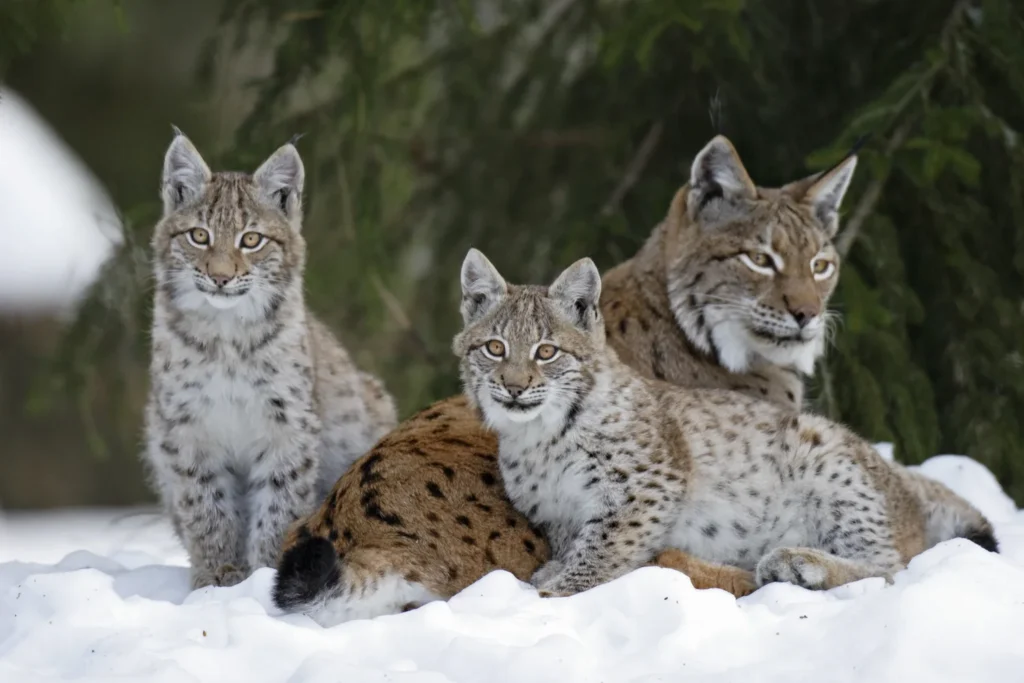
As of the 2023–2024 national inventory reported by the Swedish Environmental Protection Agency (Naturvårdsverket), official monitoring counted 1,276 lynx in Sweden, within 218 family groups. That is not a simple collapse: numbers fell from historical lows around 1930, rose to a 1978 peak, then fluctuated under annual licensed culling and habitat pressure.
Is Sweden's lynx population declining?
No single direction explains the Swedish lynx data. The population fell to around 100 animals near 1930, then recovered to a modern peak in 1978. Since then it has fluctuated within a range shaped by licensed hunting and prey availability. The 2023–2024 inventory, at 1,276 lynx in 218 family groups, is not the lowest point in that series. Historical research from the Swedish University of Agricultural Sciences (SLU) places the low near 1930 and the peak in 1978. According to the Swedish Environmental Protection Agency's published national counts, the long-term picture is fluctuation rather than a sustained decline.
The 1930 minimum is usually described as a bottleneck. Legal protection then allowed the species to recolonise much of its Swedish range. The 1978 peak came after several decades of protection. Later controlled hunting created the fluctuations visible in the official series.
Lynx counts by year
How many lynx are in Sweden? The official inventory answer for 2023–2024 is 1,276 lynx, distributed across 218 family groups. The longer series is best read as benchmarks rather than a single annual line, because monitoring methods and conservation goals changed during the century.
| Year or period | Level | Measurement | Source |
|---|---|---|---|
| 1930 | around 100 lynx | historical low before recovery | SLU historical series |
| 1978 | modern peak | highest recorded level after protection | SLU historical series |
| 2023–2024 | 1,276 lynx / 218 family groups | current national inventory | Swedish Environmental Protection Agency |
| Management reference | 870 lynx | minimum reference threshold | Swedish Environmental Protection Agency |
The official series runs from a low near 100 in 1930 to a peak in 1978. It then reaches 1,276 in the latest inventory, rather than a monotonic decline. Official figures put the national population at 1,276 as of the 2023–2024 inventory; independent density-based estimates cited in Swedish carnivore monitoring discussions have ranged higher, near 1,400. The difference exists because inventory counts focus on family groups and known territories. Density models, by contrast, extrapolate from habitat quality and track surveys.
A family group is the standard unit in Swedish lynx monitoring. It means an adult female with dependent kittens, with counts translated into total numbers using the national methodology. The 870 figure is used as a minimum reference threshold in Swedish management decisions. It is not a target, but the point below which favourable conservation status would be harder to defend under EU reporting. Because lynx cross the Swedish-Norwegian border and are surveyed in winter, the national figure is an inventory estimate rather than a complete census.
How Sweden sets its lynx hunting quota
Sweden sets its lynx hunting quota through a licensed-hunting system, not an open season. County administrative boards decide regional quotas each year under the strict-protection framework of the EU Habitats Directive. The lynx is also listed under the Bern Convention and CITES. That means any hunting in Sweden operates as a derogation rather than a general right. The Habitats Directive requires Sweden to report on the lynx's conservation status at intervals. The European Commission can act if derogations appear to undermine recovery.
The annual lynx hunting Sweden quota decision rests on the latest inventory, the number of family groups and the reference minimum. Licensed hunting accounts for most of the legal take. Protective hunting can be approved when lynx attack reindeer or other livestock. Rovbase, the Scandinavian large carnivore database, compiles the harvest and monitoring records that county boards use in those decisions. Bern Convention and CITES add international coordination, which matters because the lynx population moves across the Swedish-Norwegian border. For context on how public authorities in Sweden communicate a policy debate, see how Swedish authorities present public monitoring data.
Are lynx protected in Sweden?
Eurasian lynx are strictly protected in Sweden under the EU Habitats Directive. They are also listed under the Bern Convention and CITES. Licensed hunting is permitted only as a derogation, within quotas set by county administrative boards. It applies only while the population remains above the reference minimum. Protective hunting is a narrower exception for damage to reindeer and other domestic animals.
Why counts rise and fall
The Swedish lynx population moves with food supply, gene flow and mortality. Roe deer are a key prey species in southern and central Sweden, while reindeer matter more in the north. When prey is abundant, more lynx can survive and reproduce. Winter severity and land-use change also reach lynx numbers indirectly, through prey availability and denning sites. In practice, a year with high roe deer abundance and mild winter conditions can lift reproduction. A hard winter with deep snow can reduce kitten survival even before any culling decision.
Genetic exchange across Fennoscandia shapes the population as well. Research from SLU has shown that dispersal between Sweden, Norway and Finland can reduce inbreeding in borderline populations. Traffic collisions, disease and illegal killing add mortality that has no direct link to quotas. Legal licensed and protective hunting remove a controlled number of animals each year. Whether that removal leads to decline depends on how the quota compares with reproduction and non-hunting mortality. Rovbase records allow researchers to separate harvest mortality from natural mortality and traffic deaths. The annual cull is therefore treated as one pressure among several.
What the latest hunting season shows
The 2025 licensed season recorded 83 lynx killed from 1 March, according to Swedish authorities' figures compiled in Rovbase. County administrative boards approved the quota under the EU Habitats Directive framework. The decision followed the 2023–2024 inventory, which put the national population at 1,276 lynx in 218 family groups. The 83 figure removes about 6.5 per cent of the official population. That share matters when reproduction and non-hunting mortality are also in play.
Naturskyddsföreningen, the Swedish Society for Nature Conservation, has argued that a cull of this size may place pressure on the species' favourable conservation status. The group urges that quotas be matched to the inventory rather than to political targets. That position was reported in Swedish media coverage of the 2025 season. The 83 figure is a season-to-date count from the official reporting point. Final summaries are published after the full licensed period closes. For a related perspective on evidence and persistence, see what evidence-based research on persistence shows.
Frequently asked questions
What is the biggest predator in Sweden?
The brown bear is the largest land predator in Sweden; the lynx is the largest wild cat, smaller than the bear but larger than the wolverine.
Has a Eurasian lynx ever killed a human?
No confirmed fatal attack in the wild in modern Swedish records. Historical reports are not supported by verified documentation.
Did the UK ever have lynx?
Historical lynx remains have been found in Britain, but the species disappeared before modern reintroduction campaigns began. Current projects to release lynx in the UK are not connected to the Swedish population.
What is the population of Iberian lynx?
The Iberian lynx is a separate species, now recovering in Spain and Portugal after near extinction. It is not the Eurasian lynx covered in Sweden.
Sources
- Naturvårdsverket, Swedish Environmental Protection Agency — national lynx inventory and licensed hunting information.
- SLU, Swedish University of Agricultural Sciences — historical population research and carnivore ecology.
- Rovbase, Scandinavian large carnivore database — harvest and monitoring records.
- Naturskyddsföreningen — public statements on Swedish carnivore management.
For more context on how Sweden explains public data, see Sweden Explained.
Related explainers