
March for Science Sweden: 2017 Protests and Why They Still Matter

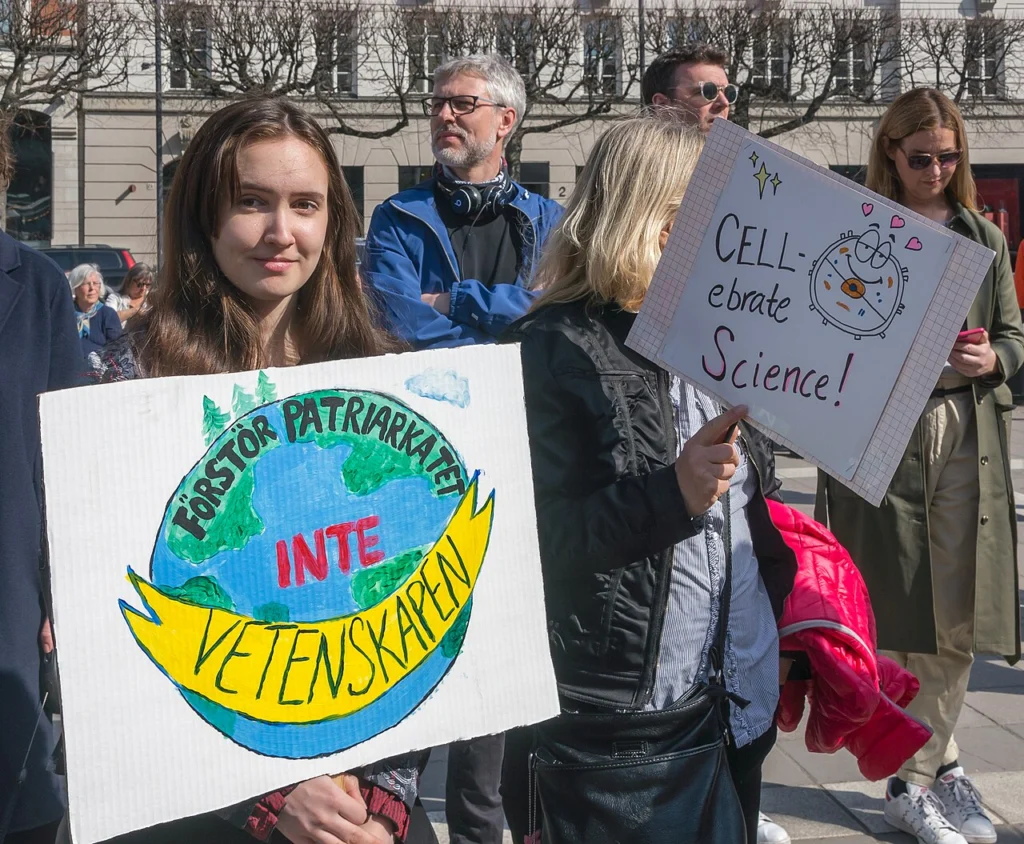
Sweden joined the global March for Science on 22 April 2017, with documented events in Stockholm and Uppsala. Marchers defended public research funding, open access to evidence and academic freedom. Researchers and students from Uppsala University were central locally, and the event remains a reference point for debates on science and politics in Sweden.
What the March for Science was
The March for Science was a global demonstration held on 22 April 2017, Earth Day. Cities around the world hosted local events on the same day, each organised around a shared concern: that public policy should rely on scientific evidence. Participants included researchers, students and members of the public. The marches were not tied to a single political party, and local groups set their own programmes. In Sweden, the emphasis fell on research funding, access to data and the role of universities in public debate. The Swedish events formed a small part of a wider international push for evidence-based policy, but they created a visible record in Stockholm and Uppsala.
The global march grew out of a specific moment. In the months before 22 April 2017, scientists in several countries had voiced concern about budget cuts, restrictions on data access and a public discourse that questioned expert knowledge. The choice of Earth Day linked the demonstration to a longer tradition of civic action around environmental and scientific issues. That framing helps explain why the event drew universities, research councils and learned societies, rather than any single political movement. The Swedish Research Council (Vetenskapsrådet, at https://www.vr.se/) has maintained a related focus on research integrity and the conditions for independent science in the years since.
Sweden's documented marches: Stockholm and Uppsala
The institutional record identifies two Swedish cities with documented March for Science activity on 22 April 2017: Stockholm and Uppsala. Attendance figures are not confirmed in the public institutional sources, and no venue-level numbers are claimed in the section below.
- Stockholm — the capital hosted a gathering that reflected the global themes of research funding and evidence in public policy. The event brought together researchers, students and members of science-focused organisations.
- Uppsala — the local event was shaped by the university community. Reporting at the time stressed two words: research and facts. The proximity of a large public research university gave the Uppsala event a visible institutional character.
The two cities illustrate how a global movement takes local form. In Stockholm, the focus sat closer to national policy and the presence of public agencies. In Uppsala, the university community supplied much of the on-the-ground presence, which coloured how the event was described in local coverage. Both gatherings carried the same core messages: defend public research funding, keep access to evidence open, and protect academic freedom. The difference was one of emphasis rather than of substance.
For readers outside Sweden, the key point is that the Swedish events were real but small in scale compared with larger marches in North America. They are best treated as a documented example of the global movement reaching a country with a strong tradition of state-funded research and high public trust in institutions. That context matters for understanding the sections that follow.
Why Uppsala University mattered
Uppsala University, a public research university, supplied much of the local presence on 22 April 2017 through its researchers and students. The university community framed the event around principles that shape its long-term work: research funding, open access to evidence and academic freedom. Its public engagement is not limited to a single march.
The university runs public academic awards that recognise research quality and public communication. One of the most visible is the Wimanska priset, a thesis award linked to engineering research at Uppsala; a separate article on this site explains what the award is and who has received it. Other Swedish academic awards point to the same culture of public recognition, where academic work is held up as a public good rather than a private pursuit. Uppsala University's English website (https://www.uu.se/en/) describes its current public engagement and research policies.
The link between the march and the university is important because it connects the event to an institution rather than to a single political moment. Researchers and students from Uppsala were central locally, but the university was not the only organiser. That distinction matters in the Swedish record, where the event is remembered as part of a broader civil-society push for evidence-based policy. The university's role was visible without being exclusive.
The same themes appear across this site's coverage of Sweden explained, where science and politics in Sweden are treated as a recurring public debate rather than a one-off event. The thesis award illustrates how the university continues to reward work in the spirit of the 2017 marches: careful research, open communication and service to a wider public. Uppsala University's thesis award sits within that longer institutional story.
Science and politics after 2017
The issues raised on 22 April 2017 did not disappear when the events ended. In 2020 and 2021, during the COVID-19 pandemic, Swedish public debate returned to questions about how research evidence should guide policy. Universities and public agencies faced pressure to explain the basis for their advice, and the language of academic freedom and evidence-based policy reappeared in public discussion.
The timeline below connects the 2017 march to the pandemic-era debates without claiming direct causation. It is a pattern in Swedish public life: when trust in institutions is tested, the relationship between science and politics becomes more visible.
| Year | Development |
|---|---|
| 2017 | Sweden hosts documented March for Science events in Stockholm and Uppsala on 22 April, focused on research funding and evidence-based policy. |
| 2018–2019 | Swedish universities and the Swedish Research Council continue public engagement work on research integrity and open access. |
| 2020–2021 | The pandemic forces public agencies to explain how research evidence guides decisions; academic freedom and expert advice return as contested topics. |
| After 2021 | Debates over evidence-based policy and the public role of universities persist, though no fixed annual Swedish march has been established. |
The Swedish Research Council (Vetenskapsrådet) publishes guidance on research integrity and evidence-based policy, two themes that carried forward from the 2017 march. The council's work operated alongside the pandemic-era discussions rather than as a direct response to them, but the continuity is clear. How Sweden used research evidence during the pandemic shows how quickly those debates returned in a national emergency, with public agencies at the centre of the conversation.
How to verify Sweden's March for Science records
For a reader who wants to check the record, the most durable sources are institutional. Follow these steps:
- Start with Uppsala University's English website for public engagement and event records.
- Review the Swedish Research Council's pages on research integrity and policy.
- Look for institutional statements dated 22 April 2017 in university and council communications.
- Treat attendance figures as unverified unless they come from an official event organiser or municipality.
Institutional sources are preferable because they are dated, attributable and archived by the organisations themselves. Social media posts from 2017 may capture the atmosphere of the day, but they are harder to verify years later. A reader preparing an article or a teaching resource should rely on the university and the research council first, then on established press coverage as a secondary layer.
FAQ
When was Sweden's March for Science?
It took place on 22 April 2017, the same day as the global event.
Which Swedish cities held March for Science events?
The best documented were Stockholm and Uppsala; local coverage in Uppsala stressed research and facts.
Why did scientists in Sweden march?
To defend public research funding, open access to evidence and academic freedom in public policy.
Was Uppsala University the organiser?
It was not the only organiser, but researchers and students from Uppsala were prominent in the local event.
Is the March for Science Sweden still active?
There is no fixed annual march, but the themes reappear in Swedish academic-freedom debates.
Sources
- Swedish Research Council (Vetenskapsrådet) — https://www.vr.se/
- Uppsala University — https://www.uu.se/en/
Related explainers