
Grit Framgång: What Duckworth’s Research Shows About Perseverance and Success

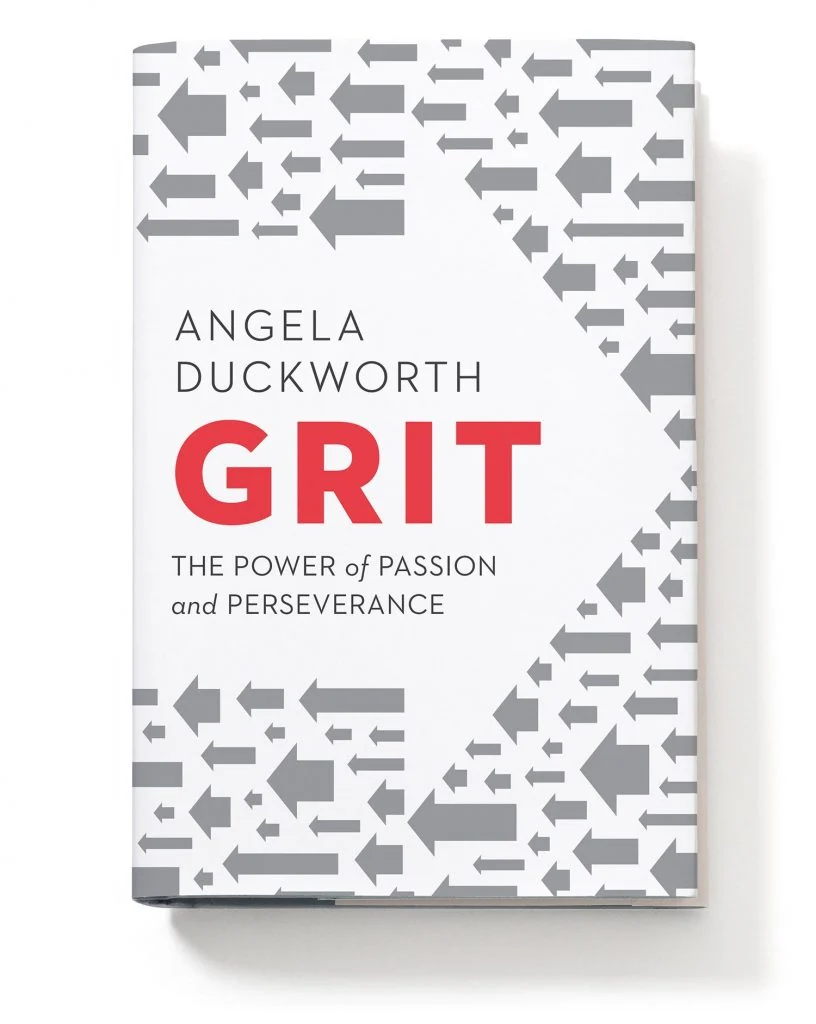
Grit framgång means success built on passion and perseverance for long-term goals. Angela Duckworth’s 2007 research found it predicted achievement beyond IQ. Later work linked higher grit to retention in the military, workplace, school and marriage. This guide connects the primary studies and explains how to measure grit.
What Is Grit?
Grit is the disposition to pursue long-term goals with sustained interest and effort over time. Duckworth and colleagues define it as passion and perseverance for long-term goals, not short bursts of effort. The definition separates two components: consistency of interest and persistence of effort. Talent concerns what a person can do; grit concerns how long they keep doing it when progress is slow. This operational definition comes from the same 2007 study and remains the basis for most later research. The distinction matters because ability alone does not explain why some people continue while others stop.
Grit vs. IQ and Talent: What the Research Shows
In the 2007 studies, grit predicted achievement in several settings even after IQ was accounted for. The table below summarises the main differences between grit, IQ, talent and grind as they appear in the research literature.
| Construct | Definition | What it predicted in the studies | Key evidence |
|---|---|---|---|
| Grit | Passion and perseverance for long-term goals; sustained interest plus effort | Higher retention in military training, further progress in the National Spelling Bee, higher university GPA | Duckworth et al. (2007) |
| IQ | General cognitive ability measured by standardised tests | Academic performance, but not retention in challenging settings once grit was controlled | Duckworth et al. (2007) |
| Talent | Natural aptitude or ability for a specific task | Raw capacity, rather than sustained achievement over years; talent alone does not equal follow-through | Duckworth et al. (2007); TED talk (2013) |
| Grind | Short-term intense effort or pressure without the durable interest component | Not directly tested as a separate construct in the primary studies; used by commentators as a contrast | Contrast used in commentary, not a primary finding |
The key difference is time. Talent and IQ describe present ability, while grit describes what a person returns to across months and years. Research treats grit as closer to conscientiousness than to cognitive skill, although the two are not identical.
Angela Duckworth’s Key Findings
Duckworth and colleagues tested grit in four samples and found that it predicted achievement beyond natural ability. West Point cadets who rated higher on the Grit Scale were more likely to complete the demanding first summer of training. National Spelling Bee contestants with more grit advanced further in final rounds. University students with higher grit earned higher grade point averages, even after IQ was controlled. In each group, consistency of interest and persistence of effort together explained differences that cognitive measures alone did not. The researchers measured grit with a self-report scale and compared it against standardised tests and performance records. What made the construct different from raw effort was the combination of long-term interest and repeated practice. The study authors treated grit as a stable individual difference rather than a short-term state.
Where Grit Predicts Success
A 2014 study by Lauren Eskreis-Winkler and Angela Duckworth tested grit across four life domains. It predicted retention in each, according to the Frontiers in Psychology paper. Grittier soldiers were more likely to complete an Army Special Operations Forces selection course. Grittier sales employees were more likely to keep their jobs, and grittier students were more likely to graduate from high school. Grittier men were also more likely to stay married. The analysis controlled for intelligence, physical aptitude and job tenure. It also controlled for the Big Five trait of conscientiousness. Higher grit was linked to a 32 per cent greater likelihood of staying in military selection. The equivalent figures were 40 per cent for keeping a sales position and 21 per cent for graduating from high school. The same pattern pointed to greater marital stability for men with higher grit. The authors noted that about 50 per cent of soldiers in the selection course dropped out. Close to half of sales staff left, and about 25 per cent of US students failed to finish high school. The school findings included a Chicago Public Schools sample.
How to Measure Grit: The Short Grit Scale
The short version of the Grit Scale, developed later by Duckworth and Quinn (2009), asks respondents to rate eight statements. Each statement is scored from 1 (not at all like me) to 5 (very much like me), and the answers are averaged. Follow these steps.
- Read each statement about persistence and consistency over time.
- Score each item from 1 to 5 according to how much it feels like you.
- Average the eight item scores into a single grit index.
- Interpret the average against other people, not as an absolute pass mark; the 2007 study does not set a single cut-off.
The items reflect the underlying split between consistency of interest and persistence of effort. Higher averages indicate that a person reports staying committed to long-term goals despite setbacks.
How to Develop Grit
Evidence suggests grit can be developed, although the direct experimental research is thinner than the measurement studies. In her 2013 TED talk, Duckworth explains how she moved from management consulting to teaching maths in a New York public school. She noticed that IQ was not the only difference between students who succeeded and those who struggled. Four practical strategies follow from the research.
- Choose one difficult long-term goal and stay with it long enough for interest to deepen.
- Use deliberate practice: focus on small, repeated improvements rather than occasional bursts.
- Reframe failure as information about effort and approach, not as evidence of fixed ability.
- Build a persistent identity by tracking follow-through over months, not only short-term results.
The lasting interest component matters as much as effort. Grinding for a short period is not the same as maintaining a consistent direction.
Limitations and Criticisms
The evidence for grit is correlational, not causal. Studies show that higher grit and better retention travel together, but they do not prove that grit alone causes retention. Self-report scales can be influenced by how people want to see themselves. Effect sizes are moderate rather than decisive. The evidence is limited when it comes to long-term experimental interventions. This means the research describes patterns; it does not yet show that a specific intervention reliably builds grit.
Uppgång applies a similar evidence-based approach in other explainers. See how Uppgång weighs evidence in public guidance, other Uppgång explainers and the editorial policy.
FAQ
What is grit? Grit is passion and perseverance for long-term goals, a concept developed by Angela Duckworth.
Is grit a better predictor of success than IQ? In Duckworth’s 2007 studies, grit predicted achievement in some settings even when IQ was controlled, though it is not a perfect predictor.
How do I measure my own grit? Use the Short Grit Scale: score statements about persistence and consistency on a 1–5 scale and average them.
Can grit be developed? Evidence suggests grit can grow through deliberate practice, choosing challenging long-term goals and reframing failure as learning.
Where has grit been studied? Grit has been studied in West Point cadets, spelling bee contestants, university students, schools and workplaces.
Sources
- Angela Duckworth, Christopher Peterson, Michael D. Matthews and Dennis R. Kelly, “Grit: Perseverance and Passion for Long-Term Goals,” Journal of Personality and Social Psychology, 92(6), 2007.
- Angela L. Duckworth and Patrick D. Quinn, “Development and Validation of the Short Grit Scale (Grit–S),” Journal of Personality Assessment, 91(2), 2009.
- Lauren Eskreis-Winkler, Elizabeth P. Shulman, Scott A. Beal and Angela L. Duckworth, “The Grit Effect: Predicting Retention in the Military, the Workplace, School and Marriage,” Frontiers in Psychology, 2014.
- Angela Lee Duckworth, “Grit: The Power of Passion and Perseverance,” TED Talks Education, April 2013.
Related explainers